

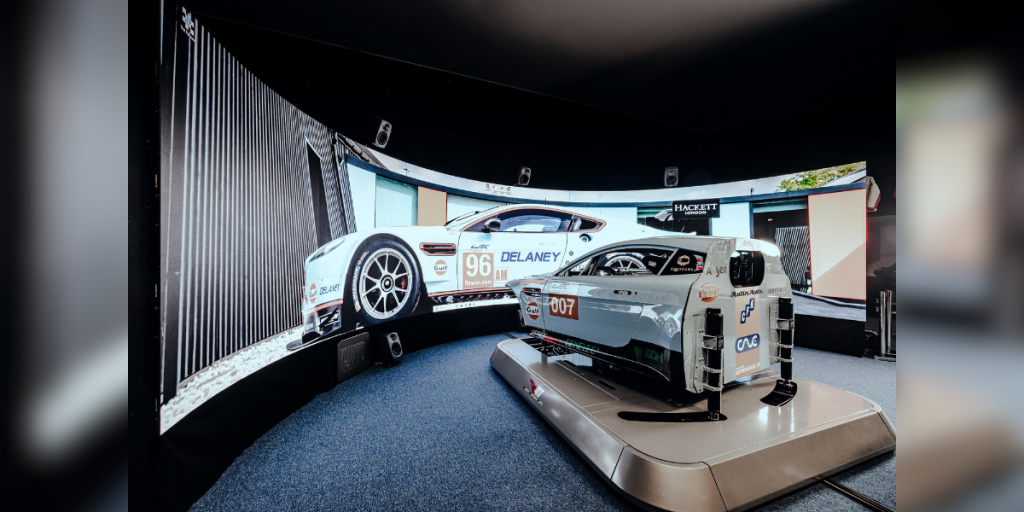
Technology is at the heart of Formula 1’s high-performance world, not only on the track but also in the preparation process. Racing simulators, equipped with advanced audiovisual systems, have become essential tools for replicating the intensity of race day. In Finland, AV engineer Andy Symonds and his company, CAVE Oy, have taken simulators to the next level by incorporating Genelec loudspeakers to create a state-of-the-art facility aimed at developing future Finnish racing talent.
Located at CAVE’s headquarters in Seinäjoki, the simulators are designed to provide young drivers with an experience that mirrors real-world Formula and GT racing. To achieve this, Symonds relied on two key partners – Genelec and Absen, a global leader in LED display technology.
“The driver’s experience has to feel exactly like it would on a physical track,” Symonds explains. “When it comes to the visuals, whether you’re using LED or projection, it’s relatively straightforward to replicate the race environment. But the audio is just as critical, and that’s something that can often be overlooked.” Symonds partnered with Genelec, a Finnish manufacturer renowned for its precision loudspeakers, to deliver immersive, high-quality sound. “Genelec is a premium Finnish audio manufacturer, and I wanted to work with a local company that shared my vision,” Symonds says. “I knew they could deliver the precise, high-quality sound needed to make this simulator truly immersive.”
Here’s a video of how this works:
A partnership with Genelec has led to the establishment of a charitable foundation, providing free access to state-of-the-art simulators for young Finnish drivers aged 12 to 18. Alongside cutting-edge technology, the facility offers access to data engineers and an experienced Formula 1 coach, ensuring a holistic training experience. “The idea was to create a development tool specifically for drivers, not just for car engineering – although we can do that too,” Symonds explains. “We’ve had the system up and running for over a year now, and already, we’ve helped a number of young drivers in their racing careers.”
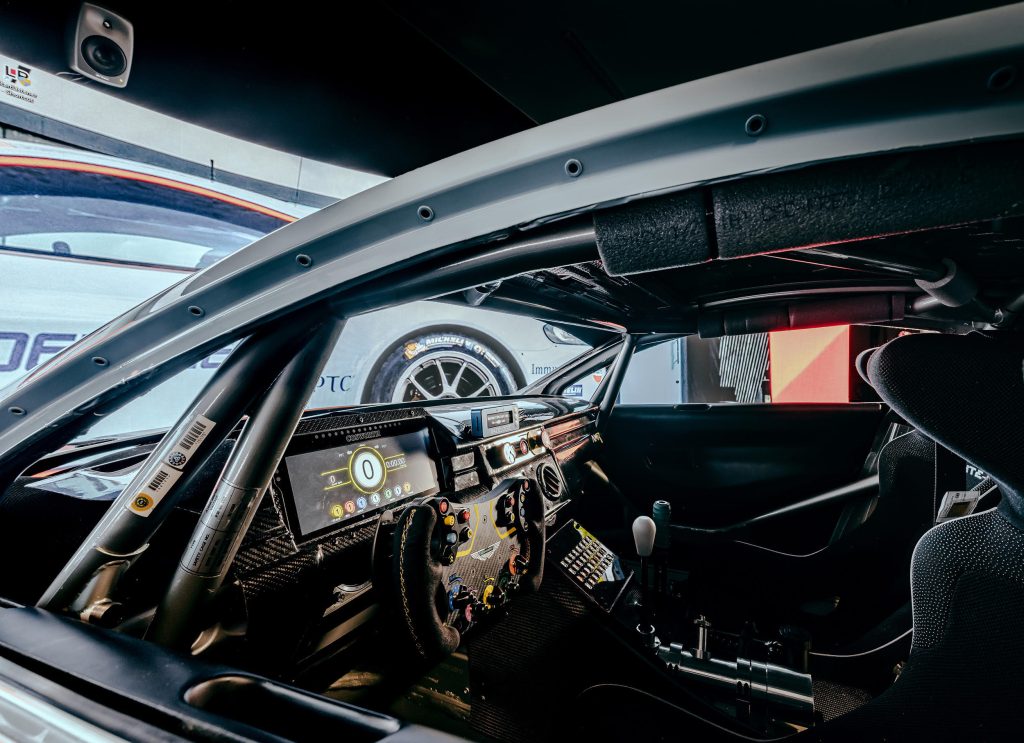
At the heart of the simulator’s realism is the advanced AV system. The Aston Martin simulator features 10 Genelec 8340 studio loudspeakers paired with two 7360 subwoofers, while the Formula chassis simulator uses five 8351 studio loudspeakers and a 7380 subwoofer. The system is complemented by a 180-degree, 7-meter-wide Absen LED screen, creating an immersive audio-visual environment. Symonds arranged the loudspeakers in upper and lower 5.1 layers to envelop drivers in realistic race-day sounds. “We needed the audio to be loud enough to feel like you’re in an actual race car,” Symonds says. “It has to be powerful enough to cut through the helmet and padding that the driver wears, yet remain balanced and clear. That’s where Genelec’s expertise really came into play.”
High-tech sound systems are transforming racing simulators, bringing drivers closer than ever to the sensation of being on a real track. From the low growl of an engine to the high-pitched squeal of tires gripping the asphalt, every detail of the soundscape has been engineered to mimic the experience of Formula 1 racing. “Some drivers have told me that they forgot they weren’t on a real track during the session,” Symonds laughs.
While simulators have long been a staple in Formula 1 engineering, Symonds’ facility shifts the focus to enhancing driver skills. “Formula 1 teams use simulators primarily to test, design and refine car performance,” Symonds explains. “But here, we’ve created a tool that helps young drivers improve their knowledge of physical tracks, learn how to deal with challenges they might face during races, and enhance their driving skills in real-time situations.”
At the heart of the experience is Genelec’s GLM calibration software, which ensures precision-tuned audio for unmatched realism. “With just one click, we achieved the perfect balance. The software ensures that all acoustic issues are minimised, and the sound remains consistent,” Symonds says. “This technology added another layer of realism to the experience. The drivers feel like they’re really on the track, and the feedback has been overwhelmingly positive.”
