

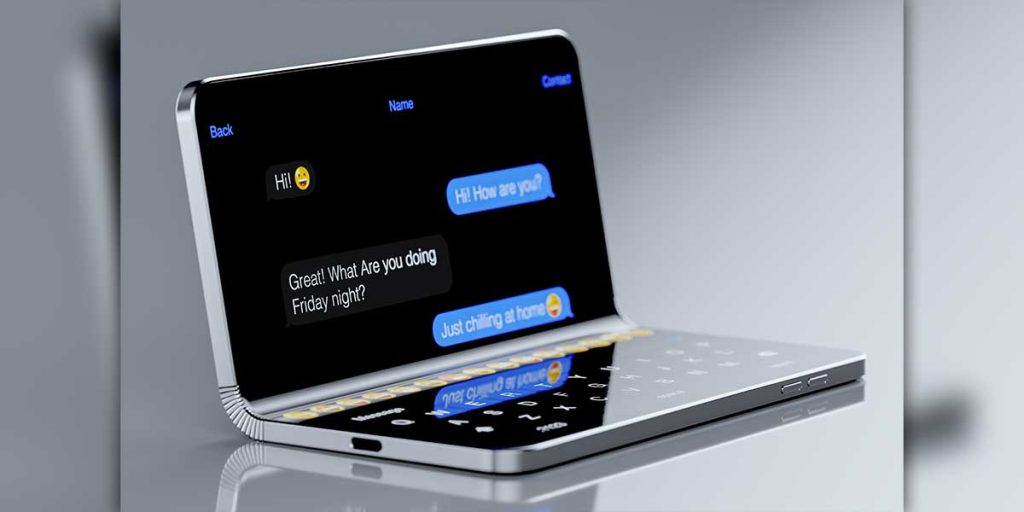
If you have not been paying attention to advances in the “foldable” screen space, now may be the time to start. Foldable smartphones have been around for a while but Google’s Pixel 9 Pro Fold seems to usher in the potential for new interest. I believe it may be a sign of the future where foldable computers become mainstream, merging mobile and computer technology into a single device.
In its folded form the Pixel 9 Pro Fold measures 6.3 inches. This is roughly the same size as other phones on the market. However, when it is unfolded the screen measures 8 inches diagonally. This sounds like a smaller size increase than it really is due to the fact that when folded the screen has the typical phone orientation, but when opened it is much more like a tablet. It literally doubles the screen size. It also has 16 GB of RAM and a 256 GB hard drive, with an option for a 512 GB hard drive. These are the same specs that we put in standard computers for our staff. Google claims a 24-hour battery life. Clearly if you are using the device as a tablet on a regular basis then this may not be your experience. Finally, it also supports stylus input for those people who want to write to take notes.
The larger screen, combined with split-screen multitasking features, makes it an option to use in place of not just a tablet, but perhaps your entire computer. You could easily draft an email, browse the web, and manage a video call all on one screen, without needing to switch between a laptop and phone. The Pixel 9 Pro Fold truly gets me thinking about the future of computing devices. As foldable screen technology continues to evolve, the logical next step seems to be foldable computers. Imagine a laptop that folds down into the size of a phone, offering the flexibility of a full-size keyboard and screen when needed, but the portability of a smartphone when you’re on the move.
I would estimate that 90% of the work I do every day could be done on a tablet. 75% of the applications that I use are web based, and the other productivity tools, like Microsoft Office can either run on a tablet, or have a web-based component. Zoom already runs on smartphones and tablets. Why then, do I currently carry around a laptop, a smart phone and a tablet? Because at the moment none of them do everything I need.The tablet screen is too small and is not designed to work well with a keyboard, but is great for reading articles, taking notes in meetings and sending emails. The phone is convenient to always have with me for texting and staying in touch.
Finally, the computer is used when I need to do work with other accessories, like a monitor, keyboard and mouse. The Pixel 9 Pro Fold is the first device that comes close to matching all these needs. Lenovo has a folding PC, the ThinkPad X1, but that does not have the features of a phone, with two cameras, texting, calling and data. But — we are getting very close. Additionally, both devices only fold in half at the moment. I am thinking about a future where a device is able to fold itself over into quarters. This will give you the screen size you need while also giving you the ability to be phone sized. Take a look at the new Motorola Razr. This device gives us an idea of how even when folded, you can still have a screen available for phone usage, a feature that would be incredible in my dream foldable.
In the AV industry should we be looking ahead to what this means for our space designs? Will boardrooms change when everyone’s computers are also their phones, meaning they always have them on hand? Will this continue to drive the industry’s move toward software design? We will still have a need to present and share, but perhaps we are doing it on people’s personal devices that they have connected wirelessly to the company network. How creative will the engineers designing the software get? If we have a room full of people with foldables can the software tie into each of these? Imagine these devices connecting to a central device that can then use the back cameras on the device, and the microphones on each device to conference in any remote participants. The software can switch cameras and mics automatically based on who is speaking. Those remote people are now getting an experience that sounds, feels and looks very much like the in person experience. Additionally, it could possibly eliminate the need for cameras, microphones and all the accessories used to control those devices.
We would, of course, have to come up with a new name for these devices since they are not quite phones, computers or tablets. I still find it interesting that we call the devices we carry with us phones. Using it as a phone is probably the way it is least used. Maybe we can call it a Photer? A Tabpho? Phoconlet?
