

A new FCC rule looks past the brand name on the box to the components inside it. Here is what AV and IT buyers need to know.
Last month, I wrote about Oct. 13, the day support ran out for the Windows builds hiding inside a lot of displays, kiosks and room systems. It turns out that date mattered for a second reason. On Oct. 13, a new Federal Communications Commission rule took effect that changes how the government decides whether a piece of electronics can be sold in the U.S.And unlike most FCC news, this one lands squarely on video gear. Nine days later, the FCC used it for the first time. The products it blocked were a dashboard camera and a wireless video transmitter.
What changed
For a few years now, the FCC has kept a Covered List of companies whose equipment it considers a national security risk. Until recently, that list was composed of only brand names. If a product was made by Huawei, ZTE, Hytera, Hikvision or Dahua, it could not get the FCC equipment authorization that nearly every electronic device needs before it can be marketed in the U.S. If a product came from anybody else, the list did not apply.
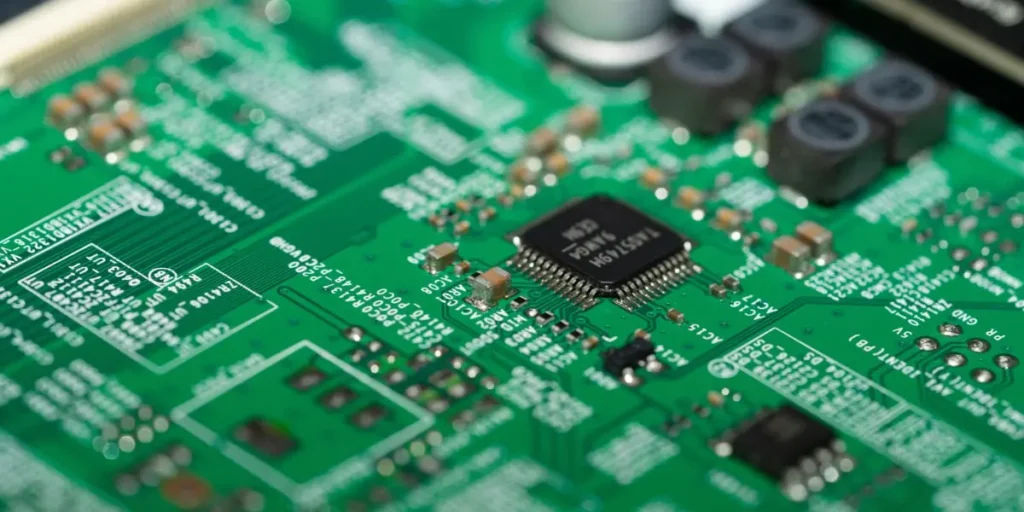
The new rule closes that gap. Adopted in July and effective Oct. 13, it bars authorization for any device, no matter who makes it or where, if it contains a logic-bearing component (a chip that does processing, not a passive part like a resistor) made by a Covered List company. In practice, a product from a brand nobody has flagged can now be blocked over a single chip on its circuit board.
The first case: a video transmitter
On Oct. 22, the FCC’s Office of Engineering and Technology announced it had stopped two products from being marketed or sold because each contained a chip from HiSilicon, Huawei’s chip design subsidiary. HiSilicon is not named on the Covered List itself; it is covered because the list includes the subsidiaries and affiliates of named companies.
The FCC pointed to HiSilicon’s own marketing, which describes the chip as designed for the surveillance market with built-in face detection. FCC Chairman Brendan Carr said video devices with surveillance chips from Covered List companies pose an “obvious and unacceptable risk.”
The FCC did not name the manufacturers or model numbers of either product. That means there is no simple way to check whether either one is in your inventory.
Why this is an AV problem
HiSilicon has spent years selling video processing chips for IP cameras, video encoders and similar gear. Chips like that end up inside products made by companies most buyers have never heard of, and then those products get rebranded and sold under other names. Think about the inexpensive HDMI-over-IP extender you bought for a lobby display, the white-label PTZ camera in a training room or the bargain encoder streaming a chapel service. The brand on the faceplate tells you very little about the silicon behind it.
Unfortunately, under the new rule, vetting the brand is only half the job. Buyers also need to know whose chips are inside and few AV buyers have ever had reason to ask.
What it does not mean
Before anyone starts pulling gear out, it helps to be clear about the limits.
- It is not a recall. The rule controls new FCC authorizations. The FCC has not said that devices already installed in your building have to come out or stop being used.
- Previously authorized products can still be sold, as long as they are identical to what the FCC originally approved. Hardware changes to those products are where things get complicated, and waivers so far have been handled case by case.
- There is no public list of affected products. Lawyers tracking the rule note that there is no authoritative list of which companies make covered components, and the FCC says its own list of Covered List subsidiaries is not comprehensive. Manufacturers are expected to check their own supply chains.
For most buyers, the practical risk is supply: the product you spec’d that suddenly can’t ship, the replacement unit that is no longer available or the hardware revision that never gets approved.
Five questions to ask before your next purchase
- Ask your manufacturer directly. Do any products we are buying, or already own, contain logic-bearing components from a Covered List company or its subsidiaries? Get the answer in writing.
- Ask your integrator about white-label gear. If a product is rebranded from another factory, who actually made the board, and do they know what chips are on it?
- Check the FCC ID. Every authorized device has one. Look it up in the FCC’s equipment authorization database to see who holds the grant. If the grantee is a company you have never heard of, that is worth a follow-up question.
- Add language to your RFPs and purchase orders. Require vendors to confirm compliance with the FCC’s Covered List component rules and to notify you if that changes. This is especially important for public institutions and anyone spending federal money.
- Plan for spares. If you rely on a low-cost video product across many rooms, find out now whether replacements will keep shipping. Standardizing on a model that gets blocked midway through a rollout is an expensive surprise.
The bigger picture
For years, AV security conversations have focused on passwords, firmware and network segmentation. This rule adds another item to that list: the supply chain behind the product. That is a conversation IT departments are already having about laptops and routers, and AV now has to have it too.
None of the five questions above takes long to ask. They are simply much easier to act on before the purchase order is signed than after the gear is installed.
